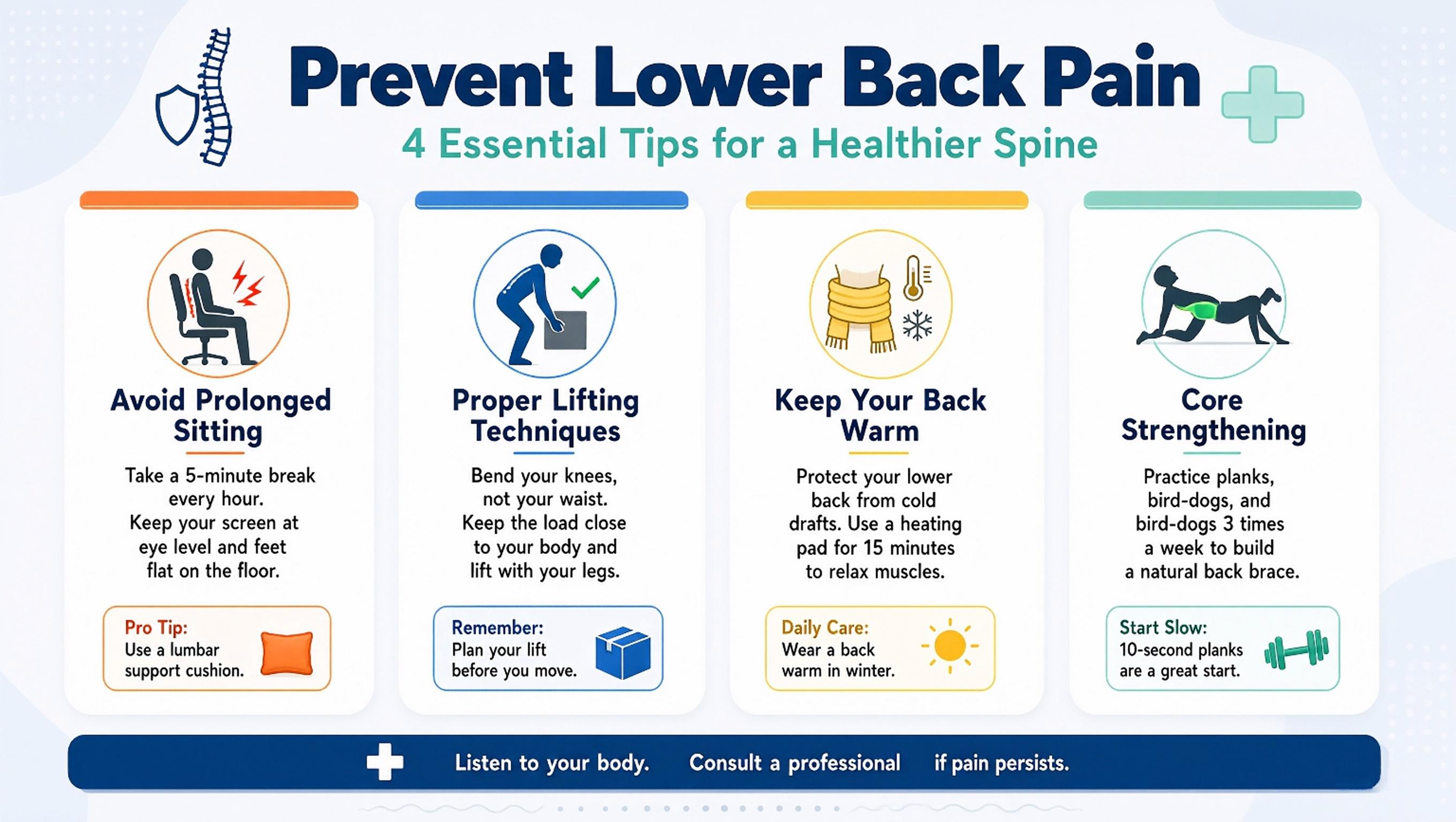
The key to preventing lumbar muscle strain and lumbar myofascial pain lies in correcting poor posture, avoiding exposure of the lower back to cold, and strengthening the core muscles. Both conditions are essentially chronic injuries caused by long-term uneven stress or excessive fatigue on the soft tissues of the lower back; they can usually be effectively prevented by taking protective measures in daily life.
Daily Posture Management
Avoid sitting or standing for extended periods: Maintaining the same posture for a long time keeps the lower back muscles constantly tense. It is recommended to get up and move around every 45–60 minutes—stretch or walk around for a few minutes.
Proper Lifting Technique: When picking up or lifting heavy objects, never bend directly at the waist. Instead, bend your knees to squat down, bring the object close to your body, and then stand up. This shifts the load from your lower back to your legs.
Ensure Proper Sleep Support: Your mattress should not be too soft; beds that are too hard or too soft can cause the spine to deviate from its normal physiological curvature. It is recommended to choose a mattress of moderate firmness to allow your lower back to fully relax during the night.
Environmental Protection and Warmth
Avoid Cold and Damp Conditions: The muscles and fascia in the lower back are highly sensitive to temperature. In cold, damp weather or when spending extended periods in air-conditioned rooms, be sure to keep your lower back warm and avoid direct exposure to cold drafts. Exposure to cold can cause local blood vessels to constrict and muscles to spasm, which may trigger aseptic inflammation.
Scientific Core Strength Training
Strengthen Core Muscles: Strong lower back and abdominal muscles act as a natural “back brace,” significantly reducing the strain on the lumbar spine and fascia. In your daily routine, try swimming or performing core-strengthening exercises such as the “bird” pose or planks.
Manage Exercise Intensity: Warm up thoroughly before exercising to avoid sudden strain that could lead to a back sprain. Also, ensure a balance between exercise and rest, and avoid blindly attempting high-intensity workouts that exceed your body’s capacity.
Overall, the key to prevention lies in incorporating the mindset of “protecting your lower back” into every aspect of your daily life, so as not to place additional strain on your lower back muscles.
Faustum Group
next: >period

509, 5/F THE CLOUD 111 TUNG CHAU ST TAI KOK TSUI HONG KONG


