What causes neck muscle strain?
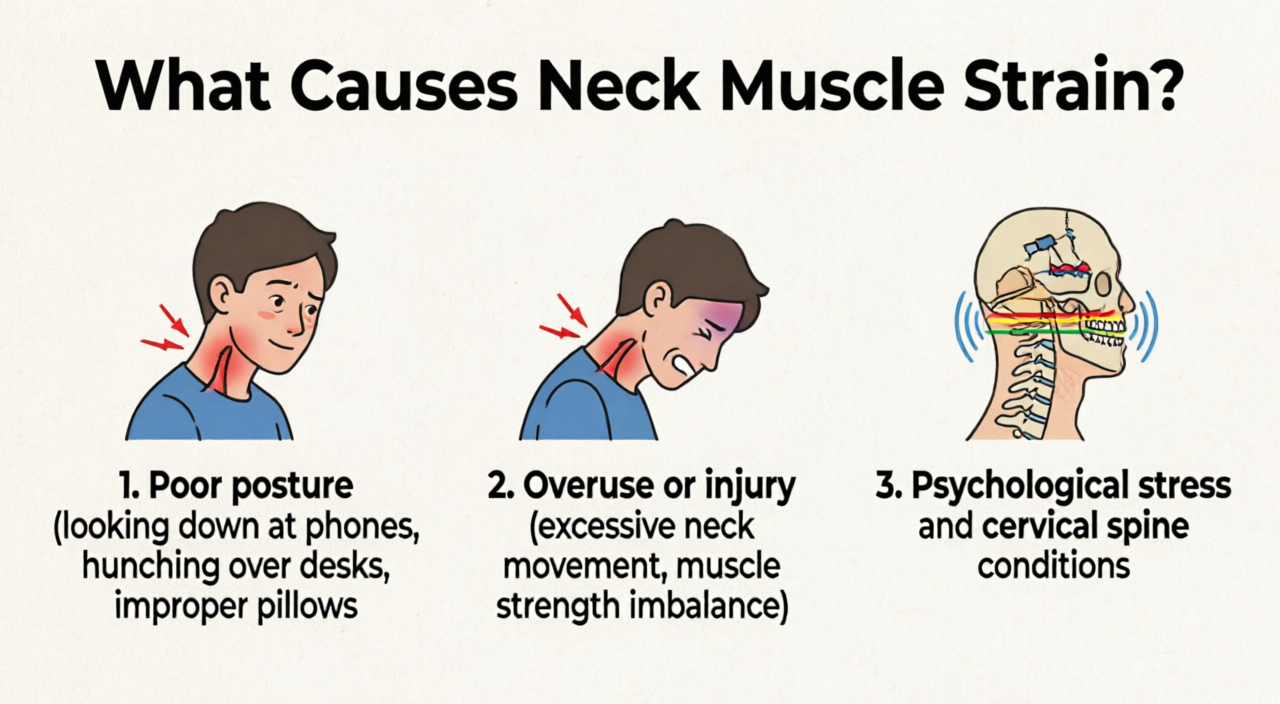
Neck muscle strain is primarily caused by factors such as prolonged poor posture, overuse of the neck, or mental stress, which lead to an imbalance in neck muscle tension and persistent stiffness.
Specifically, the following daily situations and habits are the most common “culprits”:
Poor daily posture
Looking down or hunching over a desk for long periods: This is the most common cause among modern people. Spending long hours looking at a cell phone, working at a computer, or remaining motionless in the same position keeps the neck muscles in a constant state of tension and stretching, leading to fatigue and damage over time.
Improper sleeping posture and bedding: Pillows that are too high or too low, or the habit of sleeping on one’s stomach, prevent the neck muscles from fully relaxing at night, leading to muscle tension imbalances and strain.
Muscle Overuse or Injury
Excessive neck movement: For example, vigorous neck twisting, shaking the head, or performing exercises that place excessive strain on the neck, exceeding the muscles’ tolerance limits.
Muscle Strength Imbalance: If the muscles responsible for forward flexion of the neck are overly developed, while the extensor muscles responsible for backward extension are too weak, this imbalance in strength can cause local muscles to overcompensate, leading to strain.
Psychological Stress and Neck Conditions
Psychological Tension: Prolonged states of psychological tension, anxiety, or lethargy can unconsciously cause neck muscles to stiffen and contract, leading to a disruption in biomechanical balance.
Complications from Cervical Spine Conditions: When degenerative changes in the cervical spine or a herniated cervical disc are present, the surrounding muscles continuously exert force to stabilize the cervical spine, leading to secondary muscle strain.
Neck muscle strain is often the result of the long-term accumulation of small, unconscious movements in daily life. To prevent and alleviate this condition, the key is to break the pattern of “prolonged inactivity” by getting up and moving around regularly, and by adopting ergonomic sitting and sleeping postures.
Faustum Group
next: >period

509, 5/F THE CLOUD 111 TUNG CHAU ST TAI KOK TSUI HONG KONG


