
Various conditions can be responsible for Back Pain, and it can occur in all ages and genders, right from Men and women to children.
Causes of back pain might include injury, arthritis and other underlying medical conditions, like degenerative disk disease.
Back pain in women can be related to specific conditions such as slipped disc, sciatica, hormonal lower back pain, or pregnancy-related back pain.
In this blog article, we will explore the main factors behind women’s back pain, illuminate the causes and offer insights on how to manage and prevent it.
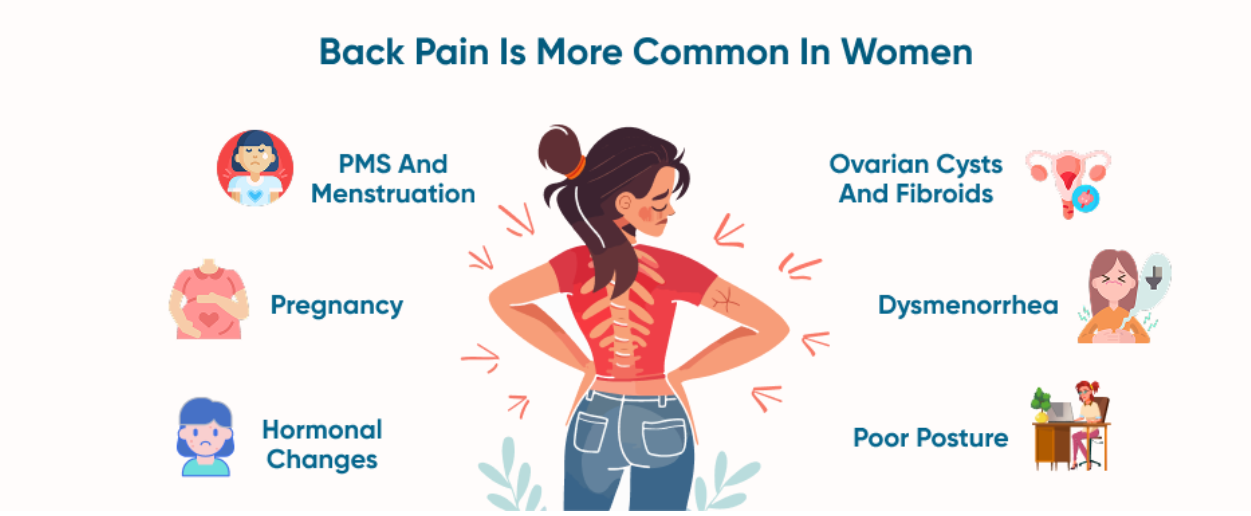
There are many causes of low back pain, some of which are more common or unique to females due to physiological differences, hormonal changes, or certain female-specific conditions.
1. Hormonal Changes—Hormones such as estrogen and progesterone fluctuate during pregnancy, periods, and menopause, affecting bones, muscles, and joints and causing back pain. For example, pregnancy hormones loosen ligaments and joints during childbirth, causing instability and back discomfort.
2. Pregnancy – Back pain often troubles pregnant women. As the baby develops, it puts extra weight on the lower back and pelvis, which can cause strain. The hormone effects during pregnancy also result in looser ligaments, adding to back pain.
3. PMS and Menstruation – One of the common conditions women face during PMS and the few days prior to their periods is lower back pain. During the menstrual cycle, increased hormones cause pelvic over-diathesis, which leads to contractions and increased swelling, thus lower back pain.
4. Ovarian Cysts and Fibroids – Some types of back pain can be caused by large cysts in or on the ovaries. These lumps may be solid or filled with fluid, while fibroids grow in the uterus and come in different shapes and sizes.
5. Dysmenorrhea – This term refers to the pain women endure during mensuration. This type of abdominal pain can be very sensitive and occurs during the days around the menses, moving from mild to severe during the course.
6. Poor Posture – This is one of the main factors that can bring about or worsen lower back pain. Poor posture and body mechanics lead to musculoskeletal stresses that cause the back to ache.
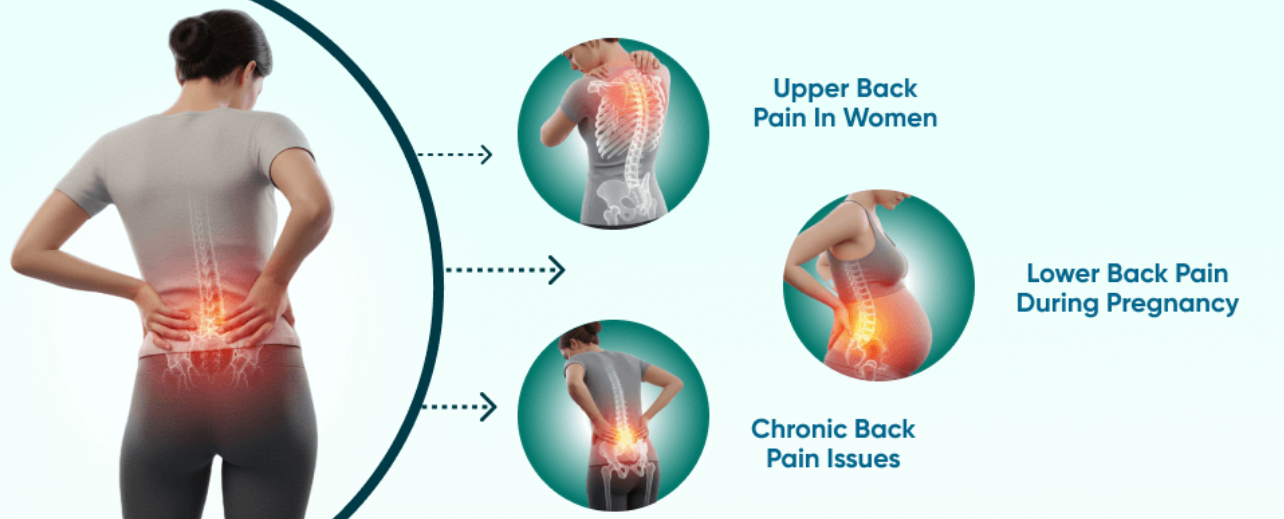
7. Upper Back Pain in Women: It is common and caused by stress, poor posture, or inactivity, such as excessive sitting. It causes muscle tightness around the upper back and shoulders, which in turn leads to pain.
8. Lower Back Pain During Pregnancy: The growing baby, along with hormonal changes in pregnancy that soften the ligaments and joints, are the most common reasons moms experience lower back pain during pregnancy. This can cause discomfort and sciatica, where the compressed sciatic nerve leads to leg pain.
9. Chronic Back Pain Issues: Women can suffer chronic back pain as a result of muscle imbalances, spinal problems or conditions such as fibromyalgia and endometriosis.

The pain women feel in their backs can differ based on how strong it is, where it hurts, and what’s causing it. Here are some signs to look out for –
Pain levels range from mild discomfort to severe
Pain centered in the upper, middle, or lower back areas
Tightness or restricted movement
Pain that spreads to the hips, legs, or buttocks
Unique pain linked to pregnancy, like pelvic discomfort or sciatic nerve issues

Here are some of the ways to prevent back pain in women –
Exercise: Regular exercise can lower inflammation and ease muscle tension. Walking, swimming, and yoga are excellent options that maintain a low impact while helping to build your strength.
Lifestyle Adjustments: Staying active and maintaining a healthy weight reduces back pain risk. Good posture, adequate sleep, and avoiding unhealthy habits improve back health.
Improving Posture: Maintaining a good posture when sitting or standing can reduce staring on the lower back.
Ergonomics: Using ergonomic furniture and support, such as chairs with lumbar support, and setting up workstations can encourage proper posture and prevent back pain.

509, 5/F THE CLOUD 111 TUNG CHAU ST TAI KOK TSUI HONG KONG


