7 Ways to Prevent Chronic Kidney Disease in Seniors
According to the National Institute of Diabetes and Digestive and Kidney Diseases (NIDDK), around 38% of adults aged 65 or older have CKD or chronic kidney disease. It is a condition in which the kidneys get damaged and lose their ability to function properly over time, typically for several months or years. In the case of CKD, individuals report a gradual decline in kidney function, leading to a buildup of waste and fluid in the body. Common health complications that occur due to CKD include anemia, bone disease, high blood pressure, heart disease, nerve damage, weakened immune function, etc.
Difference between Kidney Failure and Chronic Kidney Disease
There is a common misconception that chronic kidney disease (CKD) and kidney failure are the same. CKD refers to the gradual loss of kidney function over time, often due to underlying health conditions like diabetes or high blood pressure. CKD generally progresses slowly and can lead to kidney failure if not treated in time.
Kidney failure is a severe kidney issue which is also known as end-stage renal disease (ESRD). In this condition, kidneys can no longer function properly and support the body’s needs.
Symptoms of Chronic Kidney Disease
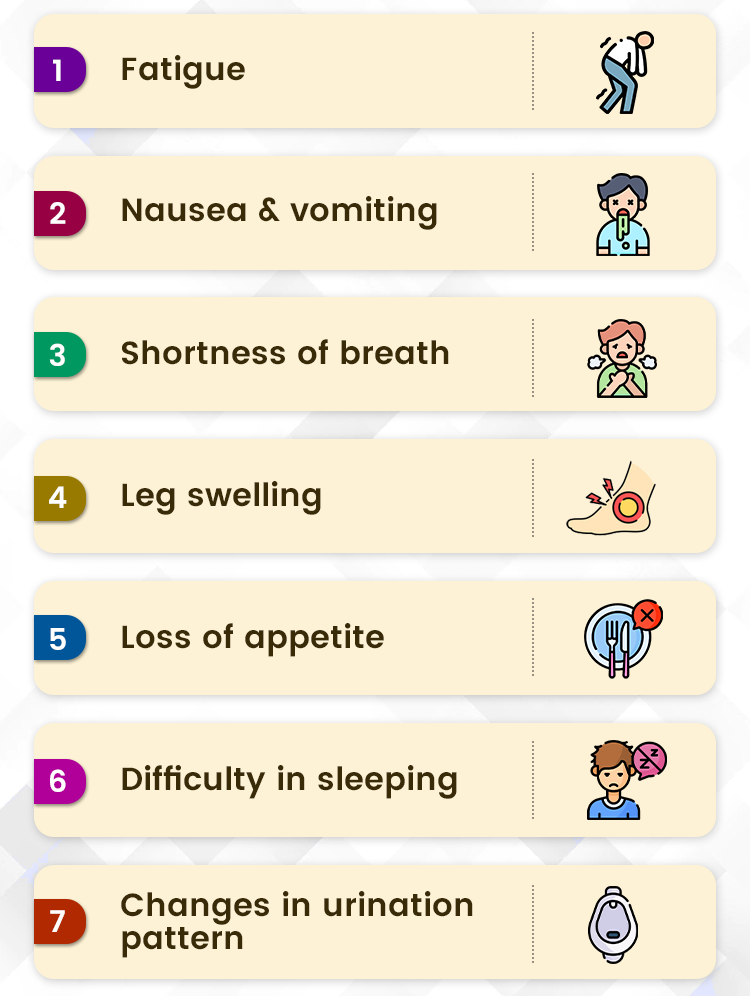
Chronic kidney disease (CKD) often shows no symptoms in its early stages. However, as the condition progresses, a person may experience a variety of symptoms which are as follows:
Inheritance can be a contributing factor behind some types of CKD. For instance, polycystic kidney disease is an inherited medical condition in which fluid-filled cysts develop in the kidneys over time, eventually leading to kidney failure.
A sedentary lifestyle, with little to no physical activity, and excessive intake of processed foods, and alcohol have been linked to an increased risk of developing CKD.
Seniors with diabetes, high blood pressure, and heart disease are at a significantly increased risk of developing CKD.
Some medications, including nonsteroidal anti-inflammatory drugs (NSAIDs) like ibuprofen and naproxen, can damage the kidneys when used over a long period of time.
CKD is more prevalent among older adults aged over 55.
Men are more likely to develop chronic kidney disease than women.
CKD is more common among African Americans, Hispanics, and Native Americans.
How is CKD diagnosed?
Chronic kidney disease is typically diagnosed by checking the estimated glomerular filtration rate. The glomerular filtration rate is a blood test that helps determine how well the kidneys filter waste from the blood. When eGFR is less than 60 milliliters per minute for three or more months, it is considered CKD. Other criteria for diagnosis may include the presence of protein or other abnormalities in the urine.

Check and monitor blood sugar levels regularly
Eat foods low in sugar, salt, and saturated fats
Be active and exercise regularly
Take prescribed medications as directed
Get adequate sleep
Do not miss regular screenings
6. Avoid long-term use of certain medications
Some medications can contribute to chronic kidney disease (CKD), particularly when used for long periods or in high doses. They include:
Nonsteroidal anti-inflammatory drugs (NSAIDs) which are commonly used to treat headaches, other pain, fever, inflammation, etc.
Proton pump inhibitors (PPIs) are medications that reduce stomach acid production and are used to treat gastroesophageal reflux disease (GERD) and other digestive conditions.
Some antibiotics, such as aminoglycosides and vancomycin can lead to kidney disease over time.
Contrast dyes are generally considered safe and are sometimes used for medical imaging tests, such as CT scans or angiograms. However, they can cause kidney damage in some people, particularly those with preexisting kidney disease.
Taking these medications doesn’t mean it will cause the development of CKD, and in many cases, the benefits of the medication may outweigh the risks. However, seniors with preexisting kidney disease should be monitored closely and may need to avoid certain medications or use them with caution. It is critical to consult a doctor for detailed guidance.

509, 5/F THE CLOUD 111 TUNG CHAU ST TAI KOK TSUI HONG KONG


